
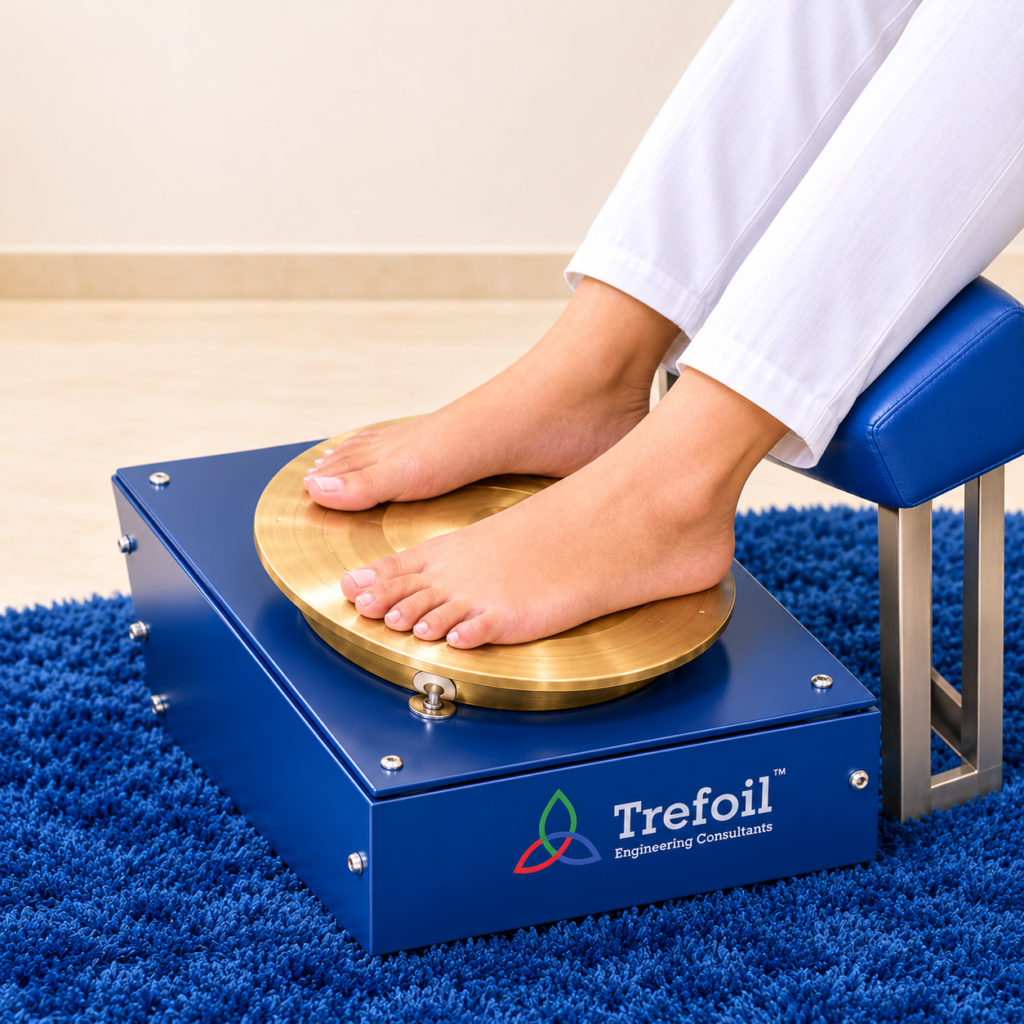
Why Are Ayurveda Clinics Including Kansa2 Foot Massagers in Their Clinics?
Have you ever noticed how much pressure our feet handle every day?
From standing for long hours and walking to managing busy work schedules, our feet are constantly at work. Yet, foot care is often one of the most neglected parts of our daily wellness routine.
In Ayurveda, foot care has traditionally received special attention. One such practice is Padabhyanga, an Ayurvedic foot massage performed using oils and traditional massage techniques.
For generations, this practice has been a part of Ayurvedic wellness routines. However, providing a consistent foot massage experience in a busy clinic can be challenging.
Manual massage requires time, trained hands and continuous effort from the therapist. When a clinic has multiple patients and several therapies to manage, maintaining a dedicated foot massage service becomes difficult.
This raises an important question:
Can traditional Ayurvedic foot massage be made more convenient without moving away from its traditional roots?
This is where modern Kansa foot massagers are finding their place in Ayurveda clinics and wellness centres.
How It All Started: From Traditional Kansa Massage to Modern Equipment
Kansa, traditionally known as Kansya (कांस्य), is an alloy of copper and tin. It has been used in traditional Indian practices for making utensils and massage tools.
One traditional application is Kansa foot massage, where a Kansa bowl or massage instrument is used along with suitable massage oil.
The practice is associated with Padabhyanga and is valued in traditional Ayurvedic wellness routines.
However, performing this massage manually requires time and physical effort. As interest in traditional wellness practices continued to grow, the need for more convenient ways to perform foot massage also became relevant.
This encouraged the development of mechanised Kansa foot massage equipment.
The idea is simple: retain the traditional Kansa massage element while using mechanical movement to make the process more convenient and manageable.
Today, Kansa foot massagers are being explored by Ayurveda clinics, wellness centres, spas and other establishments that offer traditional foot care experiences.
The Numbers Behind India’s Growing Ayurveda and Wellness Sector
The interest in traditional wellness practices is not just anecdotal. India’s AYUSH sector has recorded significant economic growth.
According to a study by the Research and Information System for Developing Countries (RIS), released through the Press Information Bureau in September 2026:
-
India’s AYUSH services sector was estimated at US$36.92 billion in FY 2024-25.
-
The sector recorded a 16.91% compound annual growth rate (CAGR) between FY 2022-23 and FY 2024-25.
-
Ayurveda accounted for approximately US$17.73 billion, representing nearly 48% of the total AYUSH services economy.
-
Clinics and day-care centres together contributed more than 71% of the sector’s total revenue.
-
The AYUSH-based wellness segment recorded a 21.29% CAGR.
These figures indicate that Ayurveda and allied wellness services are becoming an important part of India’s organised healthcare and wellness economy.
The growth also creates opportunities for clinics to improve their service offerings, introduce additional wellness experiences and invest in suitable equipment.
Source: Press Information Bureau, Government of India, September 30, 2026.
Why Are Ayurveda Clinics Considering Kansa2 Foot Massagers?
A Kansa foot massager is not simply another piece of equipment for a clinic. It can become an additional part of the clinic’s foot care and relaxation offering.
Here are some reasons why this equipment makes practical sense.
1. Bringing Traditional Padabhyanga into a Modern Clinic
Ayurveda clinics often aim to preserve traditional practices while making them accessible to modern patients.
Kansa foot massage provides an opportunity to introduce a Padabhyanga-inspired wellness experience using traditional Kansa metal and a mechanised setup.
It helps clinics create a dedicated space for foot massage without depending entirely on manual massage techniques.
2. Reducing Dependence on Continuous Manual Effort
Manual massage requires the therapist to perform repetitive movements and maintain physical effort throughout the session.
A mechanised foot massager can help reduce some of this repetitive effort.
This can make it easier for clinic staff to manage a dedicated foot massage service as part of their daily operations.
It does not replace the knowledge or supervision of a trained Ayurvedic practitioner. Instead, it can serve as an additional tool within the clinic.
3. Adding a New Wellness Service
Patients visiting Ayurveda clinics may be interested in more than consultations and prescribed treatments.
Clinics can consider introducing foot massage as an additional wellness service, depending on their treatment protocols and professional guidance.
For example, a clinic may offer a suitable foot massage session as part of its relaxation and wellness programme.
This gives patients another way to experience traditional foot care while allowing clinics to expand their service offerings.
4. Making the Experience More Consistent
Consistency matters when a clinic introduces a new service.
With manual massage, the experience may vary depending on the therapist, technique and time available.
A suitable mechanised setup can help standardise certain operational aspects of the massage process.
Factors such as session duration, equipment operation and patient positioning can be managed more systematically.
The practitioner can continue to decide the suitability and method of the session.
5. Creating a Dedicated Foot Care Experience
A dedicated Kansa foot massage setup can improve the overall presentation of a clinic’s wellness area.
Instead of treating foot massage as an occasional activity, clinics can make it a clearly defined service.
This can be particularly relevant for:
-
Ayurveda clinics
-
Panchakarma centres
-
Naturopathy centres
-
Wellness and rejuvenation centres
-
Ayurvedic spas
-
Holistic wellness establishments
6. Connecting Traditional Knowledge with Modern Expectations
Today’s wellness facilities are increasingly looking at ways to combine traditional practices with practical equipment.
Patients expect a comfortable, organised and convenient experience.
Kansa foot massagers represent one example of how traditional wellness concepts can be incorporated into a modern clinic environment.
What Does Research Say About Foot Massage?
It is important to distinguish between traditional Ayurvedic understanding and scientifically established medical evidence.
Some clinical studies have examined the relationship between foot massage, relaxation, anxiety and sleep.
For example:
A 2024 randomised controlled study published in the Revista da Associação Médica Brasileira examined the effects of classical foot massage on insomnia and anxiety among 71 pregnant women with preeclampsia.
The researchers reported improvements in the measured insomnia and anxiety scores in the foot massage group compared with the control group.
Another study, published in 2024 in the Journal of Bodywork and Movement Therapies, examined foot reflexology massage among patients undergoing haemodialysis. It reported improvements in sleep quality and anxiety measures in the reflexology group compared with the placebo foot massage group.
These studies provide interesting evidence about foot massage as a complementary relaxation practice.
However, they do not establish that Kansa foot massage produces the same results. They also do not demonstrate that a mechanised Kansa2 device can treat or cure medical conditions.
The broader evidence base for massage therapy still requires more high-quality clinical research. A 2024 systematic review published in JAMA Network Open highlighted this need.
For Ayurveda clinics, the practical takeaway is to offer foot massage responsibly as a wellness service, with appropriate patient assessment and professional supervision.
Why Equipment Selection Matters for Ayurveda Clinics
Not every foot massager is designed for professional use.
Before selecting equipment, clinic owners should consider a few important factors:
-
Massage surface: Check the material, construction and suitability of the Kansa component.
-
Movement mechanism: Understand how the massage surface operates and whether its movement suits the clinic’s requirements.
-
Patient comfort: Consider foot positioning, support and ease of use.
-
Operating convenience: Controls and session management should be easy for clinic staff to understand.
-
Maintenance: The equipment should be easy to clean and maintain between sessions.
-
Electrical safety: Proper earthing and electrical protection are essential.
-
After-sales support: Availability of servicing and technical assistance should be considered before purchasing.
The right equipment should fit naturally into the clinic’s workflow rather than creating additional operational difficulties.
Introducing Kansa2 Twin Spin Foot Massager by Trefoil Engineering Consultants
For Ayurveda clinics and wellness establishments exploring mechanised Kansa foot massage, Trefoil Engineering Consultants offers the Kansa2 Twin Spin Foot Massager.
Designed around the concept of traditional Kansa foot massage, Kansa2 brings this traditional wellness practice into a modern equipment format.
It offers clinics an opportunity to consider a dedicated Kansa foot massage setup as part of their wellness infrastructure.
Whether you are planning a new Ayurveda clinic, upgrading an existing facility or looking to expand your wellness services, choosing suitable equipment is an important part of the process.
You can explore the Kansa2 Twin Spin Foot Massager to learn more about the product.
The Way Forward: Traditional Wellness with Practical Innovation
Ayurveda has a rich history of traditional wellness practices. The challenge today is to make these practices accessible and manageable in modern healthcare and wellness environments.
Kansa foot massage is one such practice that is finding a place in the evolving wellness equipment landscape.
As the AYUSH sector grows and clinics continue to improve their facilities, equipment that supports traditional wellness services may become an increasingly relevant consideration.
For clinic owners, the decision is not just about purchasing a machine. It is about identifying useful additions that complement their existing services, improve operational convenience and create a better patient experience.
Traditional knowledge and thoughtful engineering can work together to shape the future of wellness.
Research and References
The following sources were referred to while preparing this article:
-
Press Information Bureau, Government of India (September 30, 2026)
AYUSH Emerges as One of India’s Fastest-Growing Service Sectors: RIS Study Estimates US$36.92 Billion Economy.
https://www.pib.gov.in/PressReleasePage.aspx?PRID=2316869 -
World Health Organization (WHO)
Global Traditional Medicine Strategy 2025–2034.
https://www.who.int/teams/who-global-traditional-medicine-centre/traditional-medicine-strategy-2025-2034 -
JAMA Network Open (July 2024)
Use of Massage Therapy for Pain, 2018–2023: A Systematic Review.
https://jamanetwork.com/journals/jamanetworkopen/fullarticle/2821154 -
Revista da Associação Médica Brasileira (February 2024)
The Effect of Classical Foot Massage on Insomnia and Anxiety in Preeclamptic Pregnant Women: A Randomized Controlled Study.
https://pubmed.ncbi.nlm.nih.gov/38422316/ -
Journal of Bodywork and Movement Therapies (November–December 2024)
Effect of Foot Reflexology Massage on Sleep, Anxiety and Quality of Life in Hemodialysis Patients: A Single-Blind, Randomized, Placebo-Controlled Trial.https://www.sciencedirect.com/science/article/pii/S155083072400168X
Disclaimer: This article is intended for general informational purposes. Kansa2 Foot Massager is discussed in the context of wellness and traditional foot massage. It should not be considered a substitute for medical treatment or professional healthcare advice. Individual suitability should be assessed by a qualified healthcare professional.
